↻

Please rotate your device to portrait mode for the best experience.

AKHO BANTU

AKHO BANTU

AKHO BANTU emerged by invitation as part of the INOVA × HAY Kaapenhagen Design Challenge, presented during Cape Town Furniture Week 2025 — a brief that invited Cape Town–based designers to reinterpret HAY's About A Chair AAC 222 through the lens of place.

Rather than treating the chair as a neutral canvas, FEDE Studio approached it as a language already formed — one shaped by European modernism, functional clarity, and the promise of universality — and asked what that language makes possible, and what it renders absent.

Comfort is withdrawn.
Function becomes
symbolic.

Designed by Hee Welling, the AAC 222 is a modern classic: generous, restrained, efficient. In this iteration, its most accommodating element — the seat — is removed. What remains is a structure that still stands, still performs order and balance, but no longer offers support.

With wooden legs severed and replaced with slender black steel rods, the chair's posture shifts from grounded to tenuous. Its silhouette sharpens, acquiring a presence that feels alert, watchful, and slightly estranged from use. The timber is darkened and stained, drawing the object away from the clean neutrality of contemporary interiors and toward something heavier — marked by time, memory, and wear.

AKHO BANTU
materialises a design logic
shaped through absence.

The title, AKHO BANTU, holds layered and uneasy meanings. In isiXhosa and isiZulu, the phrase translates directly to "there are no people." In everyday speech, it describes an empty place. In other contexts, it carries a more loaded implication: a condition where ubuntu — relational presence, mutual recognition — is diminished or absent.

Historically, Bantu was used during Apartheid as a racial category to designate African people. In this sense, the phrase cannot be neutral. It echoes a lived and ongoing reality in Cape Town's urban landscape — particularly within its modern, commercially coded spaces — where black bodies are strikingly scarce, and where the city often appears designed without them in mind.

AKHO BANTU draws a direct line between this contemporary absence and the inherited logics of space. The chair does not represent a person denied access; it embodies a system shaped through exclusion. Its alien, almost creature-like form is not anthropomorphic, but architectural — a visual logic that feels complete unto itself, yet indifferent to who can inhabit it.

The work holds a tension between
design excellence and erasure,
situating the city within inherited
architectural logics.
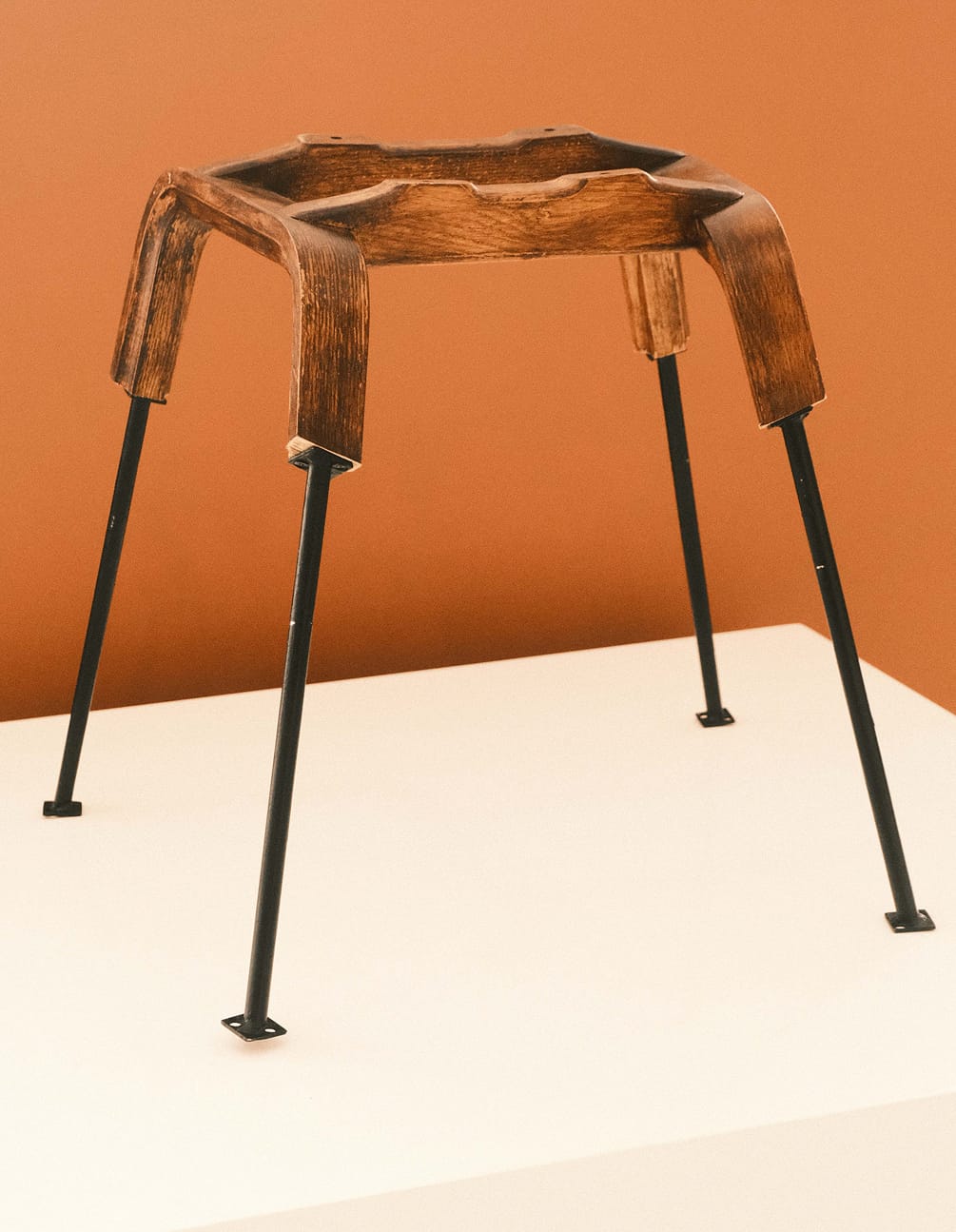
Within the context of a design challenge that celebrates Scandinavian functionalism and global exchange, the work resists decoration or reconciliation. Instead, it performs a subtraction. It removes what makes the object hospitable, leaving behind a structure that continues to circulate as "good design," even as its human reference erodes.

Presented at INOVA Concept Store, AKHO BANTU does not resolve the tension between design excellence and lived reality. It holds it. It allows the chair to stand as a quiet indictment and an open question — one that situates Cape Town's present within its architectural past, and asks what it would mean for design to begin elsewhere.

Privacy Policy

FEDE Studio uses personal information to respond to inquiries about our studio, agency and gallery, manage our relationships, and send news by email when you choose to hear from us.

Information You Share

Our inquiry forms ask for your name, email address, country, practice or interests, and any message you choose to include. The inquiry system stores your name, email, practice where provided, and message. Please avoid including sensitive personal information that is not needed for your inquiry.

Inquiries and Optional News

We use inquiry details to consider your request, communicate with you and keep relevant correspondence. Sending an inquiry does not sign you up for marketing. If you select the optional newsletter checkbox, we record your permission and the time it was given with your inquiry, so we may email you FEDE news and updates. Leaving it unchecked does not affect your inquiry.

You can withdraw marketing consent at any time by emailing info@fede.studio. A new inquiry with the box unchecked is not an unsubscribe request for an earlier opt-in. Please contact us to withdraw that earlier consent.

Services and Sharing

The website uses Supabase for database services and is configured for Vercel hosting. These services process information needed to operate the site; hosting and infrastructure services may also process technical request data, such as IP addresses and browser information, for delivery, security and troubleshooting. Service processing may take place outside your country.

Information may be handled by people and service providers who help FEDE respond to your request or operate the website, or disclosed where required by applicable law. Following the Instagram link takes you to an external service governed by its own privacy practices.

Cookies and Site Features

The management area uses authentication cookies to maintain staff sign-in sessions. This policy does not describe the privacy practices of external websites you visit through links on this site. Contact us if you have questions about technical information processed when you visit.

Retention

We retain information according to the purpose for which it was collected, the status of our relationship or inquiry, and relevant legal, accounting or dispute-resolution needs. Marketing consent records may be retained to document your choices and honour withdrawal requests. Contact us to discuss information that is no longer needed.

Your Choices and Rights

To ask about information we hold about you, request access, correction or deletion, object to processing, or withdraw marketing consent, email info@fede.studio. We may need to verify your identity before acting on a request. Requests are considered under applicable law and any relevant retention obligations.

Where South Africa's Protection of Personal Information Act (POPIA) applies, you may exercise the rights it provides and raise a complaint with the Information Regulator of South Africa. You may also have rights under other applicable privacy laws.

Contact and Updates

Contact FEDE Studio at info@fede.studio for privacy questions. We may update this policy as our services or practices change.